Who this is for
teams that need usable, inclusive, production-ready mobile apps.
Quality and diagnostics
React Native accessibility guide covering labels, roles, focus, touch targets, screen readers, forms, testing, and release checks.
teams that need usable, inclusive, production-ready mobile apps.
Quality and diagnostics work usually connects to React Native, Expo, architecture, performance, testing, and release quality.
react native accessibility
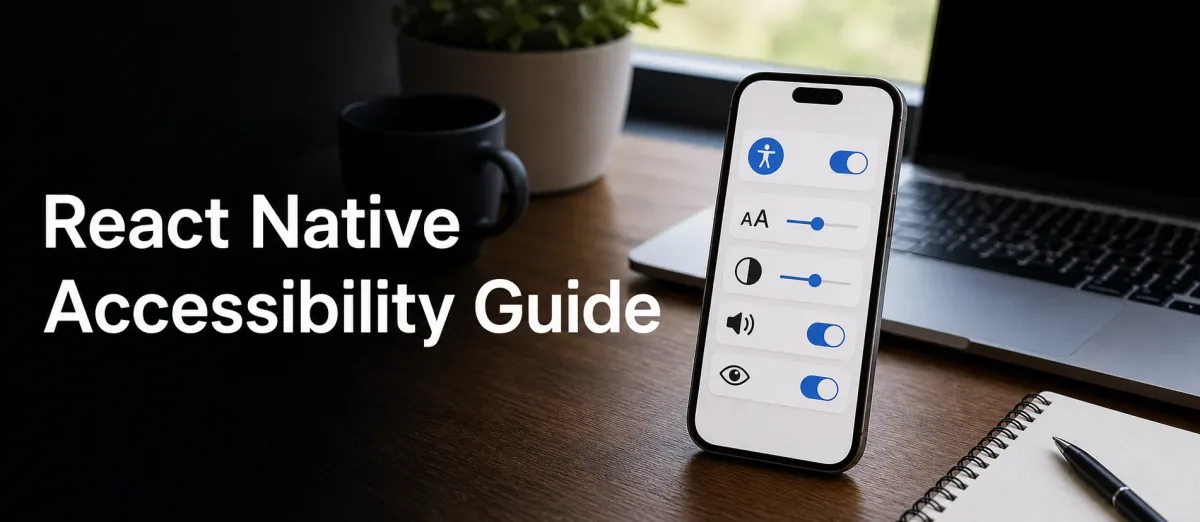
React Native accessibility means making the app usable with screen readers, large text, clear touch targets, readable contrast, predictable focus, and controls that expose the right role and state.
Treat accessibility as part of normal product quality, not as a last-minute checklist item.
Start with labels, roles, hints, button sizes, form errors, navigation order, and dynamic type. These basics catch more real problems than adding accessibility as a final audit step.
Production accessibility should be part of component design, code review, and release QA. Test important flows with VoiceOver and TalkBack, especially login, checkout, onboarding, and settings.
This sits in my Quality and diagnostics notes because it usually affects more than one screen or one library choice. In real projects, the details below often connect to architecture, debugging, release quality, and long-term maintenance.
If this topic maps to a product you are building or fixing, I can help with React Native architecture, Expo setup, native modules, performance, debugging, testing, and app store release work.
Email Numan or start with React Native mobile app development services.
I wrote this page for people who want a practical view of react native accessibility guide before they make an engineering decision or ask for implementation help.
My preference is to start with the product constraint, then choose the technical approach. A mobile app usually has competing pressures: delivery speed, app size, startup time, offline behavior, platform-specific details, analytics, release risk, and the cost of maintaining the code after the first version ships. Good React Native work keeps those pressures visible instead of hiding them behind library choices.
When I review a codebase or plan a new build, I look for the parts that will create the most operational risk: slow screens, unclear state ownership, fragile navigation, native modules without a release plan, missing test coverage, oversized images, and app-store workflows that depend on manual steps. Fixing those problems early is usually cheaper than trying to recover after users start reporting crashes or performance issues.
That is also why the pages on this site link to each other. Architecture affects performance, testing affects release confidence, Expo choices affect native integration, and component-level decisions can show up later as accessibility, debugging, or maintenance problems. The goal is not to make the app look technically impressive. The goal is to make it stable, understandable, and easy for a real team to keep improving.